


By Canvas & Ivy
Is renter-friendly wallpaper actually suitable for rentals?
Wallpaper can be an option for a rental when you have permission and the selected material’s requirements match your wall, room and intended installation period. Do not assume damage-free removal or landlord approval because a product is labeled removable. Start with four checks: permission, surface compatibility, duration and an exit plan.
Manufacturers describe different limitations. For example, Spoonflower’s Peel and Stick guidance describes short-term use of up to one year and warns that longer installations or dry conditions may leave walls needing touch-ups. That guidance concerns its product, not every removable wallpaper.
- Before sampling: Get permission and identify the wall’s paint and condition.
- Before ordering: Compare the exact material’s requirements with your room and timeline.
- Before installing: Complete the directed sample test and save removal instructions.
- Before committing: Decide whether potential restoration fits your budget.
Start with permission and restoration expectations
Review your lease’s alteration provisions and request written clarification about adhesive wallcoverings. Identify the room, wall and proposed material. Ask whether a discreet sample test is permitted and what condition the wall must be in when you leave.
Rules are location-specific. The Minnesota Attorney General’s tenant handbook says tenants ordinarily cannot paper or paint walls without landlord permission and should discuss alterations first. This is Minnesota guidance—not nationwide law or an interpretation of your lease.
A useful request is specific: you would like to decorate the wall behind the sofa, test the proposed material first, and agree on removal and restoration expectations. Ask whether any repainting would need an approved paint or contractor. Obtain separate permission for preparation that involves sanding, priming or repainting.
Photograph existing cracks, patches and paint defects. Request paint details from the property manager and keep them alongside your permission record. Treat documentation as a record of the starting condition, not an assurance about your deposit.
Keep a four-part project record
- Permission: Approved area, sample-test permission and restoration expectations.
- Surface: Paint identification, sheen, texture and visible defects.
- Duration: Planned installation and removal dates.
- Exit plan: Removal directions, available time and potential restoration costs.
Compare manufacturer requirements—not removable labels
Keep the design name separate from the material name. A floral or stripe tells you what the wallpaper looks like; you still need instructions for its backing and application method. For Canvas & Ivy, start with the wallpaper type comparison, then confirm requirements for the particular option you intend to order.
Spoonflower: formulation matters as well as sheen
Spoonflower’s Peel and Stick installation guide prefers eggshell, satin or semi-gloss paint, warns against textured walls and washable, scrubbable or no-VOC paints, and recommends a sample installation before the full order.
Those are separate checks. Identifying a satin finish does not answer whether the paint formulation falls into an excluded category. Compare both the paint product and its sheen with the selected wallpaper’s instructions.
Tempaper: smooth walls still need a finish check
Tempaper’s FAQ recommends smooth, primed, painted surfaces and warns that removal from flat, matte or low-sheen paint can lift paint. For a renter considering that material, identifying the finish is therefore an important step even when the wall looks smooth.
Do not transfer one brand’s preferred surface list to another—or either brand’s requirements to Canvas & Ivy. Obtain instructions for the exact material rather than assembling a preparation method from unrelated tutorials.
Review removal warnings before ordering
These are manufacturer instructions, not independent comparisons of damage rates. Read the linked guidance again before purchasing, and ask about any mismatch with your wall. Keep installation and removal instructions together. Include the selected manufacturer’s removal warnings in your decision: for a Tempaper project, that means addressing its warning about paint lifting from flat, matte or low-sheen finishes before committing.
Read your wall before choosing your wallpaper
Inspect the whole proposed area
Look for texture, cracks, loose paint and patch repairs rather than assessing only the most attractive stretch. Note areas with different finishes. The Wallcoverings Association’s surface-preparation guidance emphasizes clean, dry, structurally sound walls and correcting defects. Its broad guidance includes pasted installations; use the chosen material’s instructions for the actual preparation procedure.
If a manufacturer excludes textured walls, do not use a favorable sample result or another customer’s experience to disregard that exclusion. Likewise, a printed stone or plaster effect describes the artwork—not permission to install it on rough plaster.
Identify the paint—not just its color
“Standard apartment white” is not enough detail for comparing paint requirements. Ask for the paint manufacturer, product name, sheen and formulation information. A can label, maintenance record or invoice is a useful place to start.
If the paint remains unknown, leave compatibility unresolved. For a Canvas & Ivy project, take the details you have to the help center and ask what else is needed before proceeding.
Separate surface repairs from decorating decisions
Do not cover a defect simply because a busy pattern might disguise it visually. Ask the property manager how existing damage should be addressed, then check any proposed preparation against the wallpaper instructions. If the approved work does not meet those instructions, choose another location or a display that avoids direct adhesive contact with the rental wall.
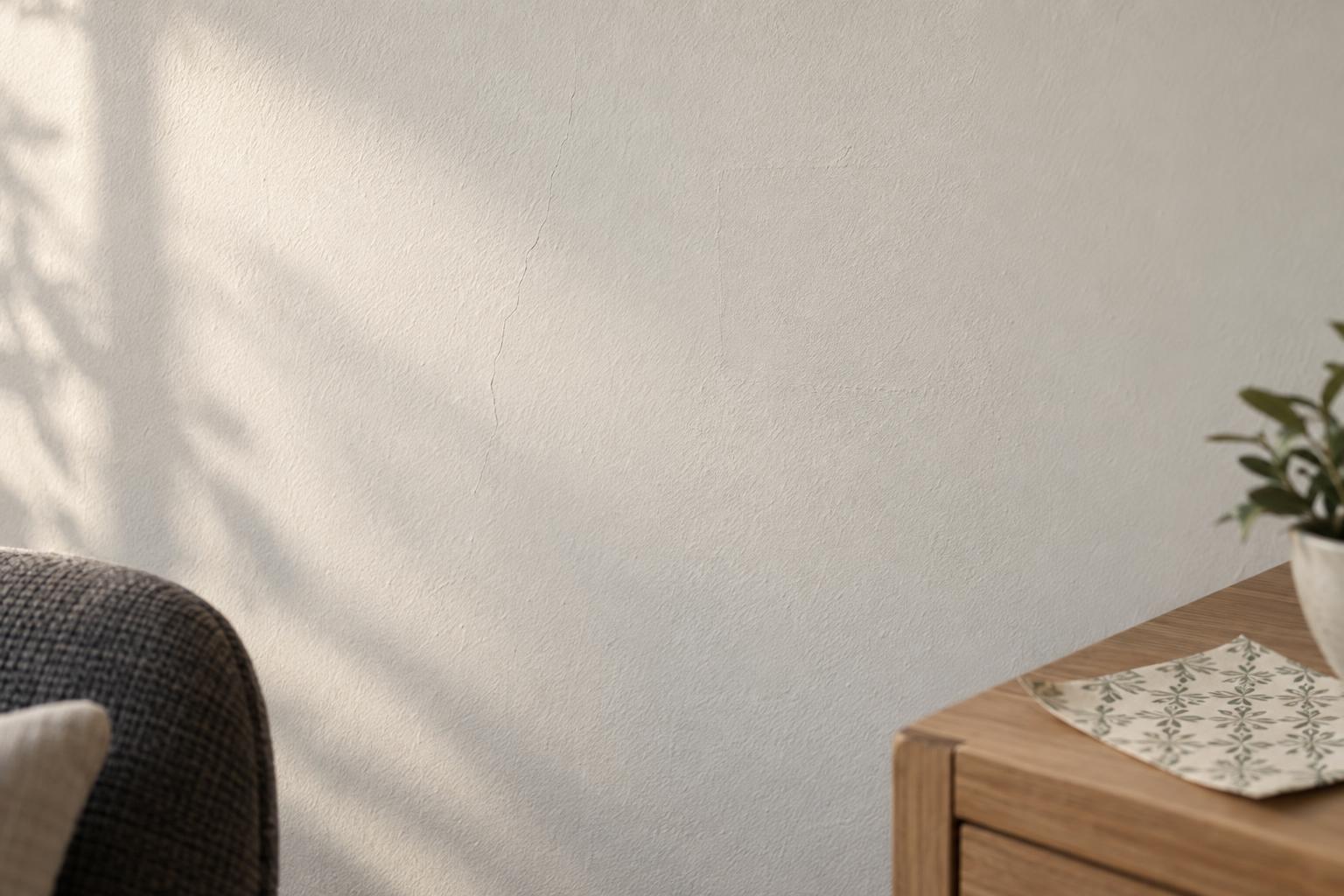
Use a sample to investigate—not guarantee removal
Spoonflower’s installation guide recommends sampling before the full order. For any brand, follow its own testing directions and use the exact material option you intend to buy. Use a swatch on a different backing for color decisions, not as a substitute for the specified material test.
With permission, choose a discreet location representative of the proposed wall. Follow the specified preparation, observation and removal method; do not borrow a test duration from another product’s tutorial.
Record what happens
- Identify the product, material and test location.
- Record known paint details and existing wall defects.
- Note application, observation and removal dates.
- Watch for lifting, loose edges or other visible changes.
- Record any residue, paint lifting or surface change after removal.
If the sample lifts or pulls paint, pause and ask for product-specific guidance. Do not add stronger adhesive or improvise with heat or solvents unless the manufacturer directs that method for the material.
Keep the result in perspective: you observed one sample, in one spot, over one period. Do not extrapolate that result to a differently painted wall or a much longer installation. Describe any patches or finish changes when asking whether additional testing is needed.
Before scheduling the full project, review the relevant Canvas & Ivy installation guidance. Keep the selected material’s instructions with your sample notes.
Match the material to how long it will stay up
“Until we move” could mean eight months or three years. Write down a target removal date before comparing products, including whether you are likely to renew the lease.
Spoonflower’s support article describes its Peel and Stick as ideal for short-term use of up to one year. It warns that longer installation or dry conditions may harden the adhesive and leave walls needing touch-ups.
Use that information only for the named product. For an eight-month project, continue checking paint and room requirements rather than treating duration as sufficient approval. For a three-year project, ask about the mismatch with the described short-term use before ordering.
For another material, request guidance covering your intended duration. If you renew the lease, revisit the removal plan instead of allowing the original project schedule to lapse unnoticed.
Choose the room and layout before committing to a pattern
Can renter-friendly wallpaper go in a bathroom?
Check the exact material and exposure. Spoonflower excludes high-moisture environments for its Peel and Stick product. By contrast, Tempaper’s FAQ allows bathroom use with steam and indirect moisture.
Do not extend that allowance to direct shower spray or another brand’s wallpaper. Describe the actual position when seeking guidance: a powder-room wall and a wall receiving shower spray are different proposals. Choose the location from the material requirements, not a bathroom mockup alone.
Focal wall or full room?
A focal wall offers a defined place for pattern behind a bed, sofa or dining table. Wrapping a room creates a more enveloping look, but means assessing, measuring, installing and eventually removing wallpaper from more surfaces. Compare the complete scope before choosing.
Sketch the furniture against each candidate wall. A tall bookcase might conceal most of a botanical design, while a low sofa leaves a broad area visible. In a bedroom, consider the headboard’s height and the portion of pattern that will remain on either side.
Plan around the finishes you cannot change
Place samples beside existing flooring, trim, curtains and upholstery. For example, a cream-ground floral can be a softer pairing with honey-colored wood than a crisp black-and-white geometric. If the apartment has cool gray flooring, try a sample with both warm and cool notes before committing to an entirely warm palette.
View samples from the doorway and your usual seat, in daylight and under your lamps. Decide whether the wallpaper should lead the room or sit behind artwork. The pattern picker can help narrow visual choices after the material checks.
Two patterns to consider once compatibility is confirmed
Choose between these designs for their appearance, then confirm the selected material’s surface, room, duration and removal requirements separately. Use room mockups for styling inspiration, not as proof of suitability for your rental.
Southern Stillness for a softly layered living room
Southern Stillness Wallpaper combines creamy white magnolia blooms, dusty green leaves and a softly mottled background with muted contrast. Consider it behind a sofa when you want botanical detail without a sharply graphic color scheme.
Try its warm-neutral palette beside linen upholstery, wood furniture and aged-brass accents. The tradeoff is subtlety: if you want the wall to become the room’s strongest color statement, this restrained floral may not be your preferred direction. A dusty-green cushion could repeat the foliage without making every accessory floral.
Pastel Promenade for color without a figurative motif
Pastel Promenade Wallpaper uses watercolor stripes in lavender, sage, peach, sky blue, butter yellow and aqua, separated by white channels. Consider it for an eclectic living area or bedroom where you want several gentle accent colors to draw into cushions and artwork.
Compared with magnolia branches, the evenly spaced stripes offer a more ordered visual rhythm. Check a sample beside existing striped fabrics or blinds to decide whether the combination feels intentional or too repetitive. For a simpler scheme, choose one stripe color for accessories and keep larger furnishings neutral.


Three realistic rental projects—and different decisions
An eight-month stay with known satin-painted walls
Imagine a renter with written permission for a living-room focal wall and records identifying smooth satin paint. The next steps are to check the paint formulation, inspect defects and complete the selected material’s directed sample test.
Eight months fits within Spoonflower’s described short-term period, but the remaining requirements still need attention. For styling, a botanical wall behind a low sofa would leave more of the composition visible than the same pattern behind tall storage.
A three-year tenancy with texture and unknown paint
Spoonflower’s texture warning and short-term guidance conflict with this hypothetical proposal. Tempaper’s smooth-surface recommendation also leaves a textured-wall project unresolved.
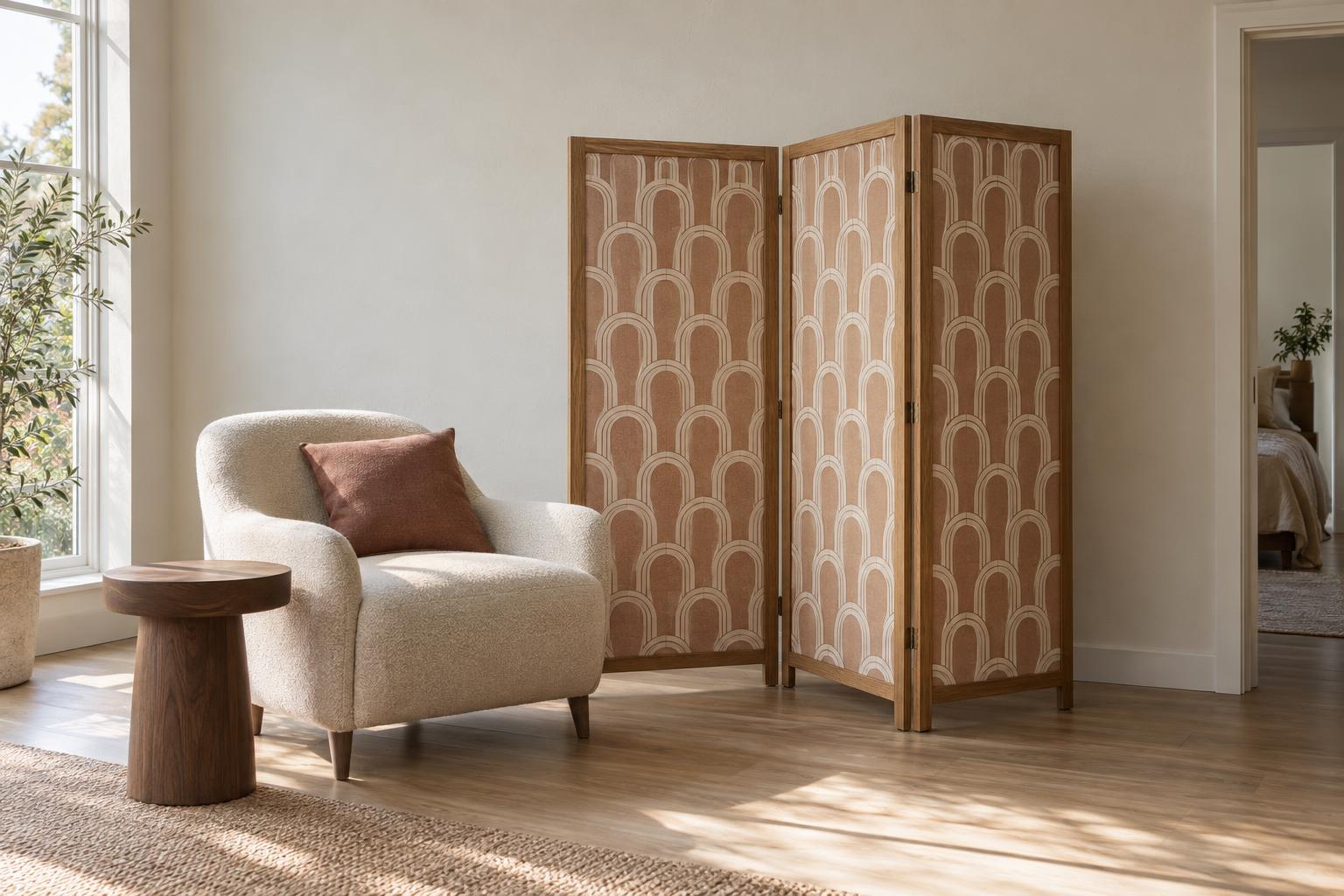
Consider wallpaper displayed in a freestanding frame or on a tenant-owned screen instead. Confirm that the backing suits the wallpaper and follow the display’s stability requirements. A framed section makes sense when you want a contained decorative element; a screen offers a larger patterned backdrop but occupies floor space.
A patterned wall beside a shower
Permission alone does not settle moisture exposure. Spoonflower’s high-moisture exclusion weighs against this proposal. For a Tempaper option, ask specifically about any spray reaching the wall rather than relying on its allowance for steam and indirect moisture.
If the position conflicts with the chosen material’s requirements, move the pattern to another room. Repeat one of its colors in bathroom towels or accessories to connect the spaces without forcing the installation.
Budget for the whole project, including its end
Include samples, wallpaper, permitted preparation, tools, optional installation help, removal time and potential restoration. Our wallpaper measuring guide can help organize measurements; calculate the order using the exact product’s usable dimensions and matching instructions.
Check the strip layout and pattern matching rather than relying on wall area alone. Mark doors, windows and the intended stopping points on your sketch. Compare the complete cost of one focal wall with the larger scheme before buying.
Schedule removal before the final handover rush, leaving time to assess the wall and complete agreed restoration. If possible repair would make the project unaffordable, choose decoration that avoids adhesive contact with the rental wall.
Your renter-friendly wallpaper decision checklist
Before placing the full order, confirm:
- Permission, approved walls and restoration expectations are clear.
- The wall’s texture, condition and paint are identified.
- The exact material’s requirements match the proposed surface.
- Manufacturer guidance fits the intended installation period.
- The room conditions and water exposure are suitable.
- Any directed sample testing is complete.
- The pattern works with furniture and fixed finishes.
- Measurements follow the product’s dimensions and matching instructions.
- Product identification and removal instructions are saved.
- Removal time and potential restoration fit your budget.
Proceed when the checks align. Pause when essential information is missing. Choose an alternative when the wall or timeline conflicts with documented requirements. Aim for a room you enjoy now and a move-out plan you can realistically carry out.
Sources and further reading
- How to Install Peel & Stick Wallpaper | Spoonflower
- Peel and Stick Wallpaper – Spoonflower Help Center
- Surface Preparation - Wallcoverings Association (WA)
- During the Tenancy - Landlords & Tenants
- FAQ - Designer Wallpaper | Tempaper & Co.
Cover image: AI-generated design concept; product photographs appear alongside their catalog links.